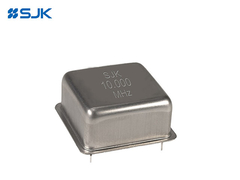
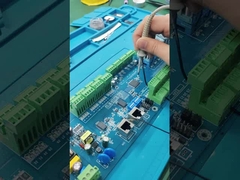
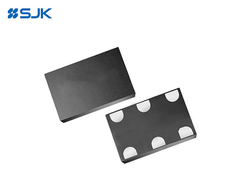
Brief: Wondering how the F-11 DIP SAW Resonator delivers stable frequency control for your B2B applications? In this video, we provide a detailed walkthrough of its 4-pin configuration, demonstrate its integration into communication and audio circuits, and showcase its performance across the 2.0 MHz to 50 MHz range. You'll see how its low insertion loss and robust design ensure reliable operation in various environments.
Related Product Features:
Operates across a wide frequency range from 2.0 MHz to 50 MHz for versatile application use.
Features a 4-pin DIP configuration with pins designated as Input, Ground, Output, and Ground for easy circuit integration.
Designed with low insertion loss of 2.1 dB max to maintain signal integrity and stable frequency output.
Compact dimensions of 10.9*4.45*4.0mm allow for easy integration into space-constrained electronic devices.
Built to withstand a broad operating temperature range from -20°C to +70°C for reliable performance in various environments.
Offers an equivalent series resistance of 100 Ω, ideal for high-frequency applications requiring precise control.
Operates at 5 V with a storage voltage of 10 V, ensuring durability and consistent performance.
Suitable for use in wireless communication systems, digital TV, satellite receivers, and automotive applications.
Câu hỏi thường gặp:
What is the frequency range of the F-11 DIP SAW Resonator?
The F-11 DIP SAW Resonator operates across a frequency range of 2.0 MHz to 50 MHz, making it suitable for a wide variety of electronic applications requiring stable frequency control.
How is the 4-pin configuration of the resonator arranged?
The pin configuration is as follows: Pin 1 is Input, Pin 2 is Ground, Pin 3 is Output, and Pin 4 is Ground. This standard arrangement facilitates straightforward integration into your circuit designs.
What are the key applications for this DIP SAW resonator?
This resonator is widely used in wireless communication systems, digital TV, satellite receivers, and is also suitable for industrial, medical, and automotive applications due to its stable performance and reliability.
What is the insertion loss of the F-11 resonator and why is it important?
The insertion loss is rated at a maximum of 2.1 dB. This low loss is crucial as it minimizes signal attenuation, ensuring the output frequency remains stable and accurate for high-performance applications.